Showing posts with label sociology. Show all posts

Wednesday, January 21, 2015

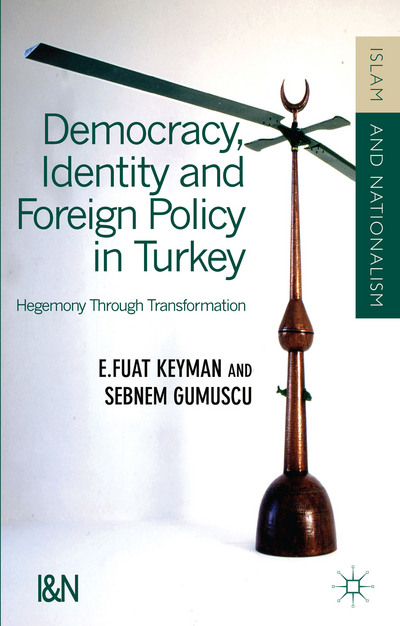
Democracy, Identity and Foreign Policy in Turkey

Democracy, Identity and Foreign Policy in Turkey


E.Fuat Keyman, Sabancı University
Şebnem Gümüşçü, Middlebury College 

Palgrave Macmillan, 2014


The recent history of Turkey is dominated by the country's transformation into a modern democracy. Over the past few years Turkey has been increasingly recognised as a nation of economic, political and cultural significance as well as being a vital political connection between Europe and the Middle East. In this compelling volume, Professor Keyman and Dr. Gumüsçu put democratisation in Turkey under the microscope with an especial focus on recent transformations under the Justice and Development Party (AKP). Accordingly, it explores to what extent Turkey's transformation under the AKP has led to democratic consolidation as well as asking if there is a disconnect between economic, cultural, and urban transformation, on the one hand, and democratic consolidation on the other? Furthermore, this book also takes the opportunity to explore several issues that have a direct effect on the consolidation of Turkish democracy such as globalization, foreign policy activism, the kurdish question, religious governance and civil society. By critically analyzing the dialectic between domestic transformations and global/regional dynamics, the book also discusses the ways in which Turkish transformation is affected by the Arab uprisings as well as how Turkey may inspire these countries.


Table of Contents

1. Introduction

2. Turkey's Transformation


3. Constructing Hegemony: the AKP Rule


4. AKP's Hegemony and Democratic Consolidation


5. Turkey's Proactive Foreign Policy under the AKP


6. Turkish Foreign Policy in the aftermath of the Arab Uprisings


7. The AKP, Arab Uprisings and the Kurdish Question


8. Secularism, Democracy and Identity


9. Civil Society and Democratic Consolidation


10. Conclusion: Turkey at the Crossroads: Democratization through the Strong EU Anchor


Monday, July 07, 2014

For a Post-Sociological Analysis of Political Life

Alain Touraine, EHESS Paris, June 2014http://www.resetdoc.org/story/00000022422
1. We usually call historical rather than modern societies whose systems of social organization are mainly defined by the resources they use and by their social institutions, which shape these resources in line with key cultural orientations which are first of all social representations and modes of construction of human creation and freedom. Our societies are defined not only by their activities but, even more deeply, by their creations and value-oriented interpretations of their productions, included their own limits. These interpretations are both economically and organizationally situated and universalistic in their meaning: they are cultural constructions of human creativity and of its limits, in materially defined social situations. In the western world - and in other societies – we usually define material situation and the cultural pattern in which we have lived during the two past centuries as the industrial society, in which human creativity and freedom are represented by their capacity to increase the productivity of economic activities.

2. These cultural constructions almost always have an evolutionary dimension. They are first of all theories both of Modernity (singular) and of processes of modernizations (plural).

Many cultural historians have accepted the idea of secularization, because universalistic, defined as the progressive elimination, in these cultural constructions, of all kinds of non-human, sacred principles of creation and creativity (but most of them criticize the general tendency of power-holders to impose on the people they dominate the idea that their own power is sacred). Other interprets of modernity and modernizations defend an opposite view, as I do myself. Instead of announcing and supporting the triumph of utilitarian rationalist and of functionally defined social norms, they describe the progressive interiorization, which is the humanization, of the representation of creativity. Among them it is common to call humanism the substitution of “human rights” or analogous notions for all “sacred” principles, from God to common good, Republican institutions Progress. These moral – or rather ethical – views of human creativity and freedom are opposed both to individualism and to all forms of social integration. To put it in different words, they reject all kinds of reciprocity or complementarity between social systems and individual or collective actors.

3. Over the XXth century our type of historical society has experienced two major transformations.

a/ The first one is that our capacity of self-transformation which was to a large extent limited to the awareness that industrial production had extended to all sectors of activity. Not only to information and communication, which have been identified by prominent sociologists, like Manuel Castells, with “post-industrial society”, but to all kinds of productions and consumptions and, in particular, to human opinions, representations and other attitudes. One of the most important consequences of this “production” of social behavior is the decline – not necessarily negative – of the traditional idea of a representative democracy which supposed that collective choices correspond to “objective” interests.

b/ The second one is quite different but has even more visible historical consequences.

The destruction of the western hegemony over the whole world – which was associated with a painful and often bloody liberation of dependent social categories in western countries has opened the way to the take-over of the universalistic components of the Enlightenment by leaders of all kinds of revolutionary - class, national or religious – movements, who have imposed their authoritarian or totalitarian power on the populations they had freed from the western and capitalist domination, creating new dictatorships over populations which are defined by identities and no longer by internal social relations.

c/ We are now in an extreme situation: the universalistic principles of the Enlightenment appear to be destroyed – more or less completely – in most parts of the world.

In the so-called first world a new kind of finance capitalism which has no economic function-investment or credit – is so global that no political institution can control it. In the second world Leninist regimes impose the absolute power of a communist party which is identified with an authoritarian state. In what we used to call the third world military dictatorships and sometimes religious political leaders impose an anti-democratic regime or try to do so.

The victory of all these non-democratic forces is not complete and even less stable. But there is a deep rupture between the advances of democracy and human rights in countries which refer themselves to universalistic values and the majority of the world population, which is governed by economic or political forces, which do not refer themselves to these values.

Modernity and traditions or identities can be equally destroyed by the absolute power of authoritarian and anti-democratic leaders of modernization processes from which the reference to a universalistic definition of modernity is increasingly eliminated.

4. There is no reason to think that sociology can go on with its previous concepts in spite of the fact we no longer live in societies which build a social image of themselves, which speak of themselves with social categories.

It is a fact, it seems to many observers, that what we call social problems, social conflicts, and even social movements are more and more difficult to analyze with social categories and more precisely with socio-economic categories. In industrialized countries unions are much weaker than a generation and political parties are no longer representative of social classes and of labor conflicts and during the last 5 years Western Europe was socially relatively quiet (compared with the’ 30 s).

In more radical terms, concepts like society, social system, integration and control appear to have lost most of their analytical usefulness. Sociological analysis appears to be an empty territory, surrounded by at least two very busy fields of study:

On one side cultural studies, and multiculturalist theories, to explain or to solve even social problems which are formulated by the actors themselves in cultural terms, especially in non-western countries, while in western countries problems and actors are more often defined in psychological terms.

On the other side it appears that a large part of what was we used to consider as sociological theory is now presented and analyzed in political terms. The analysis of social systems is transformed into an analysis of processes of change, which gives a central importance to a concept of justice which eliminates the substantive background of the traditional concept of common good or general interest. This evolution seems to correspond to the rapid wearing out of social democratic policies, especially since the victory of British New Labour and Schroder’s reforms in Germany. No social scientist has won a wider influence than J.Rawls.

Especially in European countries, but in the US as well, we feel the absence of basic political debates provided that socialist parties no longer propose the socialization of capital and that capitalist countries devote a large part of their resources to basic services, education, health, pensions and family allowances, which are controlled and financed by the state. We live in a world without conviction, to use M.Weber’s word.

5. In our situation, which is defined by the generalized process of market economy and by the predominant role of power – holders which eliminate or control social and political movements, that I have mentioned at the beginning of this short paper, is it possible to discover new conflicts and new narratives which play the same central role that class struggle did in industrial society or the conflict between monarchy and republican state in societies dominated by political categories? What seems clear is that central problems and actors can no longer be defined in social terms. Actors tend to be defined by a cultural identity, while social situations are mainly defined as political and economic processes of social change.

But why should we not accept this absence of correspondence between systems and actors as the new central conflict in our post-social collective life?

In front of authoritarian and totalitarian regimes and of world-wide networks of speculation or of communication, we know, by our own historical experience, that it is not enough to assert and defend specific rights, political, social or cultural. The only force which is strong enough to win over uncontrolled political domination is the democratic spirit itself, if we define it by the subordination of all powers, rules and even laws, to universal human rights. This idea, which seemed so weak and often so corrupt in a recent past, is the only one which can prevail over absolute power, because it is defined in universalistic terms. Social and political movements leave the way to ethical protest which fights against scandals, violence and destructive power. These new ethical and democratic movements and these convictions are deeply different from revolutionary actions, which aim first of all at seizing state power by a violent action. Many dramatic experiences have made clear to us that revolution and democracy are contradictory processes of social change. At least if we define democracy not by its institutions but by the priority of universal human rights over all social and political rules.

In every major conflict today the defense of basic human rights is directly involved; interests are not strong enough to win battles against Big Brother. And expressions like the “masses” or the “people” are part of the vocabulary of the power-holders, not of democratic actors.

Democracy is based on the subordination of all rules and even laws to the universal rights of all human beings to consider their own freedom and creativity as paramount values. Democracy is a voluntary activity. Acts of resistance or dissidence against authoritarism regimes are considered as symbolically important because they manifest and strengthen the democratic spirit. To put it in slightly different terms, democracy is the substitution of universal human rights for all “sacred” ideas, forces or sovereignties, including popular.

“ The active defense of universalistic values is basically the same everywhere; but it takes different forms and uses different processes to adapt itself to different historical and cultural heritages, to different processes of modernization. Britain, France, Germany, The United States have followed very different processes of modernization and have created different kinds of social movements and of political action. This elementary observation gives us the only acceptable meaning of tolerance.

We must tolerate the differences among patterns of modernization and different democratic experiences.

But we must be radically intolerant of non-democratic regimes and policies and recognize, that in all political regimes, even in the democratic ones, non-democratic practices and even anti-democratic laws survive and even grow. Reforms are permanently necessary”.

The general approach I have just introduced can be defined by its opposition to two others.

The first one is influential mostly in post-colonial or dependent countries : it considers as the central world-wide conflict the opposition between global capitalism and identities; natural religious or linguistic. Such an interpretation leaves us as a unique choice the preference given to an economic or to a political and cultural absolute undemocratic power.

The second one redefines democracy by its capacity to incorporate basic conflicts into integrative tolerant and flexible political countries. It corresponds to the middle of the round parties or governments which are gaining ground in most European States, where both extreme nationalist right wing and revolutionary leftist parties are losing ground. But could very well increase their influence on a continent where xenophobia is the most powerful stream of opinion, especially in Northern countries.

The approach I have submitted to your attention has the advantage to be the only one which is formulated in general terms but the disadvantage not to correspond in most countries to organized political forces and, even less, to programs of government and ideologies. If I selected it, it is above all because I consider as the core of the democratic spirit the reference to universalist human rights and to rational thinking in agreement with the basic texts in which they were first formulated in particular in England, Holland, United States, France and in the former Spanish colonies from the 17th to the beginnings of the 19th and later for the United Nation and by modern scientists and logicians.

The weaknesses of the governments and societies which adopted these democratic states are not a strong enough argument against their central theoretical importance.

Let’s define them with more conviction than ever.  

Wednesday, April 23, 2014

The Prospects for Arab Democracy

Book_3D_-_Understanding_Tahrir_Square_small_cropped_transparent
Stephen Grand
Brookings Insitution Press, 2014

Amid the current turmoil in the Middle East, Understanding Tahrir Square sounds a rare optimistic note. Surveying countries in other parts of the world during their transitions to democracy, author Stephen Grand argues that the long-term prospects in many parts of the Arab world are actually quite positive. If the current polarization and political violence in the region can be overcome, democracy will eventually take root. The key to this change will likely be ordinary citizens—foremost among them the young protestors of the Arab Spring who have filled the region's public spaces—most famously, Egypt's Tahrir Square.

The book puts the Arab Spring in comparative perspective. It reveals how globalization and other changes are upending the expectations of citizens everywhere about the relationship between citizen and state. Separate chapters examine the experiences of countries in the former Eastern bloc, in the Muslim-majority states of Asia, in Latin America, and in Sub-Saharan Africa during the recent Third Wave of democratization. What these cases show is that, at the end of the day, democracy requires democrats.


Many complex factors go into making a democracy successful, such as the caliber of its political leaders, the quality of its constitution, and the design of its political institutions. But unless there is clear public demand for new institutions to function as intended, political leaders are unlikely to abide by the limits those institutions impose. If American policymakers want to support the brave activists struggling to bring democracy to the Arab world, helping them cultivate an effective political constituency for democracy —in essence, growing the Tahrir Square base —should be the lodestar of U.S. assistance.


  • 185 KB
  • 34 KB


  • Advance Praise for Understanding Tahrir Square


    "Judicious and far-ranging examination of how the experience of democratization from Central and Eastern Europe to Latin America, Asia, and Africa can help inform our understanding of the challenges and opportunities facing contemporary movements in the Middle East. A timely and practical guide for democracy activists as well as policymakers who want to support their aspirations."
    —James B. Steinberg, Dean, The Maxwell School of Citizenship and Public Affairs, Syracuse University, and former Deputy Secretary of State
    "With rigor and clarity Grand assembles an enormous amount of insight and information about democratic transitions from around the world and highlights important possible applications of this comparative experience to the daunting challenges that democracy faces in the Arab world."
    —Thomas Carothers, Carnegie Endowment for International Peace
    "Understanding Tahrir Square is not just a name of a book. It is a long-forgotten fantasy, a desperate wish, and a dilemma more complicated than a daytime soap opera. So, if you really have a weird urge to still try to understand Tahrir Square, get an 8-ball, or better, try your luck with this book."


    —Bassem Youssef, Host, Al Bernameg (“The Jon Stewart of Egypt”)

    Monday, February 10, 2014

    The Precariat: Emergence of a global ‘dangerous class’?

    Jan Breman, New Left Review 84 (11-12 2013)

    Guy Standing, The Precariat: The New Dangerous Class, Bloomsbury Academic: London 2011
    Up till the 1970s, the notion that the Rest would follow in the footsteps of the West was intrinsic to the dominant development paradigm. [1] Through industrialization and urbanization, the ‘underdeveloped world’ would replicate the experience of the advanced economies in the nineteenth century: growing employment in manufacturing, rising living standards, mass consumption. If there were not, as yet, many industrial jobs available for the land-poor migrants who began flocking to the cities of Latin America, Africa, the Indian Subcontinent and Southeast Asia, where land reform had been negligible, the consensus was that urban life itself would help them in their search for employment. For the time being they had to make do with whatever low-paid work was accessible to them, as waged hands or self-employed, living in makeshift shelters on the city outskirts or on vacant land. The burgeoning informal sector was at first seen as a zone of transition, a buffer that would disappear as labour was absorbed by the dynamics of industrialization into a growing formal economy. This upward mobility turned out to be a rare occurrence, however, and millions remained stuck in the informal economy that they had helped to build, or drifting back and forth between the slums of the urban periphery and the impoverished rural hinterland, forming a vast stratum of precarious labour.

    Now, it seems, it is the West that is following the Rest when it comes to the growing insecurity of work conditions. With every recession since the 1970s, prolonged episodes of high unemployment, privatizations and public-sector cutbacks have served to weaken the position of labour in North America, Europe and Japan; trade-union movements were hollowed out by the shrinkage of the industrial workforce, through factory re-location or robotization, and the growth of the non-unionized service and retail sectors; the rise of China, the entry of hundreds of millions of low-paid workers into the world workforce and the globalization of trade helped to depress wages and working conditions further. Part-time and short-contract work has been on the rise, along with that ambiguous category, self-employment. An extensive literature has now grown up around the issue of informal and precarious labour in the advanced economies. What relation does this bear to the condition of workers outside the OECD, where the vast mass of humanity is located? Is it possible to generalize about global trends, or do specific economies need to be examined comparatively? What are the political implications of changing workforce patterns? Are we in fact talking about a new phenomenon?
    An economist at the International Labour Organization from 1975 until 2006, Guy Standing should be well placed to address these questions. Though his recent work has focused largely on the condition of labour in the Western world, he is well acquainted with the precarious nature of work and life for most people in the global South; he has been a presence at international seminars and conferences discussing the vulnerability of workers in the informal economy for many decades. His first publication with the ILO was a scholarly treatise on labour-force participation in low-income countries in 1978, followed by labour-force studies on Jamaica, Guyana, Malaysia, Thailand and elsewhere. In the mid-80s, Standing was responsible for a series of ILO analyses of labour-market ‘flexibility’ in the OECD countries, which took a sceptical view of neoliberal nostrums while accepting that the capitalist economies had entered a new era, marked by unemployment and fiscal crises. In the early 90s he switched to Russia, editing In Search of Flexibility: The New Soviet Labour Market (1991) for the ILO, followed by post-Apartheid South Africa withRestructuring the Labour Market: The South African Challenge (1996).
    Three more general books have followed over the last fifteen years: Global Labour Flexibility(1999), Beyond the New Paternalism (2002) and Work after Globalization (2009) all addressed similar themes, looking at the transition from the post-war era of ‘statutory regulation’ to that of post-1975 ‘market regulation’ from a critical Polanyian perspective, with data drawn mainly from the advanced-capitalist world. Standing defined seven forms of labour security—adequate opportunities, protection against dismissal, barriers to skill dilution, health and safety regulations, training, stable income, representation—all of which were being eroded in the new era. He identified six components of ‘social income’—direct production, wages, community support, company benefits, state provision, private/rentier income—each of which was shifting in different ways for different groups. Globalization, he argued, was creating a new class landscape, with seven clearly delineated social strata. In 2002, Beyond the New Paternalism identified ‘flexiworkers’ as a crucial group; seven years later, Work after Globalization replaced the term ‘flexiworkers’ with ‘precariat’, which by then was already in relatively wide circulation. Standing argued by way of remedy, as he has done since the mid-80s, for a new ‘politics of paradise’, underwritten by a universal basic-income grant.
    His latest work, The Precariat, aims in part to rehearse these themes for what Standing calls ‘the lay reader’. But it also introduces a new claim: that there is now a new class in the making, a ‘global precariat’. Standing argues once again that the dynamics of globalization, along with concerted government drives for labour flexibility—a euphemism he abhors—have led to a fragmentation of older class divisions. He locates the ‘precariat’ in the bottom half of what is now a seven-class system. Above it are the elite (‘a tiny number of absurdly rich global citizens lording it over the universe with their billions of dollars, able to influence governments everywhere’); the ‘salariat’, well entrenched in large corporations and government administration, still enjoying stable full-time employment, pensions and paid holidays; a smaller segment of skilled ‘proficians’, highly rewarded own-account consultants and specialists; and the rump of the old working class, about which Standing is particularly scathing. Below the ‘precariat’ come the unemployed and the lowest class of all, ‘socially ill misfits living off the dregs of society’.
    The ‘precariat’ in Standing’s definition consists of all those who are engaged in insecure forms of labour that are unlikely to help them build a desirable identity or career: temporary and part-time workers, sub-contracted labour, call-centre employees, many interns. It might be thought that these were classic proletarians: stripped of the means of subsistence and with no option but to sell their labour power in order to survive. Yet Standing is unequivocal: ‘The precariat is not part of the “working class” or the “proletariat”.’ He offers a peculiarly restrictive definition of the latter, limited to ‘workers in long-term, stable, fixed-hour jobs with established routes of advancement, subject to unionization and collective agreements, with job titles their fathers and mothers would have understood, facing local employers whose names and features they were familiar with’. Though he acknowledges that in UK surveys, for example, nearly two-thirds of those aged 25–34 define themselves as ‘working class’, in part precisely because they are in precarious jobs, Standing dismisses this as identity confusion. Terms coined in the past, it seems, will not do to express their predicament. Instead, the ‘precariat’ is described in terms of what it does not have. Standing lists once again seven forms of labour security—all of which the ‘precariat’ must do without. Of the six components that contribute to ‘social income’ the ‘precariat’ must depend largely on wages alone. Lacking any work-based identity, or sense of belonging to a solidaristic labour community, its psychology is liable to be determined by the ‘four As’: anger, anomie, anxiety, alienation.
    Demographically, the members of this class-in-the-making are remarkably heterogeneous. The ‘precariat’ is disproportionately female, Standing writes, though it is unclear whether the growing entry of women into insecure waged labour is ‘cause or effect’; men are more likely to experience ‘precarization’ as a loss of status. Youth make up its core, often forced to take dead-end jobs in order to service their debts; but with pension cuts, ‘old agers’ are also entering back into its ranks. Migrants not only comprise ‘a large share of the world’s precariat’ but, as ‘denizens’ rather than citizens, are ‘in danger of becoming its primary victims’. Defining ‘work’ as a broad category of human activity that includes social reproduction, and ‘labour’ as work done for wages, Standing describes the long hours of ‘work-for-labour’ involved in applying for precarious jobs—commuting, queueing, form-filling, answering questions, obtaining certificates—and ‘the ever-more complex procedures to gain and to retain entitlement to modest benefits’ that make large demands on claimants’ time and are fraught with tension.
    The concluding chapters discuss the political propensities of this ‘new class’. Standing identifies a ‘bad precariat’ which, angry and bitter at seeing governments bail out bankers at its expense, and corroded by nostalgia for a golden social-democratic age, is drawn to ‘populist neo-fascism’. By contrast the ‘good precariat’ is young, unburdened by memories of full employment and said to favour a political agenda remarkably similar to Standing’s own: a ‘politics of paradise’ that envisages a universal basic income, lifelong education, residency rights for migrants, cooperatives and the revalorization of work, as steps towards ‘more equal access’ to five key assets—economic security, time, space, knowledge and finance capital. Current government strategies to deal with this incipient ‘dangerous class’ include surveillance, workfare and the demonization of migrants and the unemployed—policies more likely to deepen the insecurities of the precarious, in Standing’s view, leaving them open to the appeal of the far right. The centre-left must abandon the interests of ‘labour’ and a dying way of life, which it has upheld for too long: ‘The new class is the precariat; unless the progressives of the world offer a politics of paradise, that class will be all too prone to listen to the sirens luring society onto the rocks.’
    Many of these notions have been recurrent features of Standing’s work, now repackaged—as the subtitle about a new ‘dangerous class’ might indicate—in more meretricious form. Readers hoping for an informative new analysis will be disappointed: facts and figures are few and far between, and mainly consist of examples drawn from the Anglophone media—New York TimesGuardian,Economist—rather than the ILO’s vast databank. In style and method, The Precariat reads like a book-length opinion piece. Despite the claim that the ‘precariat’ is a global class, the focus remains firmly on the advanced economies: most of Standing’s examples are drawn from the US,UK, France, Germany, Japan and South Korea. Once in a while there is a short excursion to distant lands, China in particular, but soon we are back in the capitalist heartlands, whose populations had become accustomed in the post-war period to the idea that life and work would carry on getting better, but have been confronted over the past few decades—and especially in the wake of the 2008 financial crisis—with a sharp deterioration.
    Where does the term ‘precariat’ come from? Its etymological origins lie in the Latin precari: beg, pray, entreat; hence, insecure, dependent on the favour of another, unstable, exposed to danger; with uncertain tenure. The precarious situation of labour was recognized in the nineteenth century as a defining condition of proletarianization, in the classic sense: stripped of the means of subsistence on the land, workers could only survive by selling their labour; the precariousness of their livelihood features in the Communist Manifesto. In the Catholic tradition, meanwhile, precarità also referred to an order funded by donations. In France, précarité came to describe the condition of those living hand-to-mouth in the 1990s, amid high youth unemployment and ‘McJobs’; the sense of danger intensified by the mass protests of 1995. In Italy, the inevitable neologism il precariato—combining ‘precarious’ with ‘proletariat’—had been coined not long after the 2001 Genoa protests against the G8. It was raised as a slogan by post-operaistimilitants in Milan, organizing casual workers in an alternative May Day protest in 2004—but as one of them put it in a recent YouTube interview: ‘The precariat: is it a social subject, a social stratum, a class, a category, a cohort, a generational concept—who cares!’
    An assessment of The Precariat, then, must focus on its one novel claim: that ‘the precariat’ is a new global class. Yet the notion that those on temporary and part-time contracts will be forged into a single class—one with interests radically distinct from those of full-time or unionized workers—is so patently untenable that at times Standing himself hardly seems to take it seriously. At one point he writes that the ‘precariat’ comes in many different varieties; at another, that this ‘class-in-the-making’ could come to comprise ‘everybody’. His motive in distancing himself from the usual class terminology, or in employing it with eccentric new definitions of his own, lies in his hostility to what he calls ‘orthodox labourism’, by which he means not reformist trade-unionism, the usual referent, but a ‘Fordist pattern’ of ‘stable jobs with long-term employment security’—working conditions from a bygone era, which hardly require his disdain.
    ....

    Download a PDF file

    Monday, January 06, 2014

    Modernization, Secularization and International Relations

    Metin Koca, London School of Economics and Political Science
    e-IR 

    Introduction
    “Modern politics is a chapter in the history of religion”, says John Gray at the very outset of Black Mass (2007: 1).  Gray’s particular claim is that modern teleological ideologies inherited the apocalyptic vision of conventional religious thought. Yet, this claim that modern politics is a chapter in the history of religion might be made to mean many other things. For instance, it may mean that religion survived long before, and will survive long after, modern politics; or that religion discounts itself from being perceived as a pre-modern phenomenon, as its norms began, at some point, to penetrate into those of modern politics.  Common to all is the assumption of a “stubborn persistence of religion in the global arena” (Shupe, 1990: 17).  Furthermore, like many others, Bech and Snyder (Bech et. al, 2011: 208) claim that “religion presents analytical challenges to all […] traditional international relations paradigms”. The question must then be asked: why was it neglected in mainstream international relations studies? The answer is hidden in the way that modernization and secularization theses have influenced the discipline.
    As is for any scientific objective, the received wisdom of the social sciences is that ‘the modern’ is he who devalues obsolete superstitious thought of the religious past, and values the compelling scientific thought of the secular present. In order to serve scientific thought in a fruitful way, one is expected to accomplish in one’s mind “the replacement of religious consciousness […] by an empirical, rational and instrumental orientation” (Bruce, 2002: 3). The universal historical process that the secularization thesis puts forward, however, is not limited with this very basic meaning of ‘secularity’ as anti-mythical. The multidimensional presence of secularity rather relates to its variegated meanings, through which the secularization thesis attained a paradigmatic status within the modern social sciences (Casanova, 1994). Having been positioned at the heart of modern science, these meanings have quite deeply established themselves behind International Relations (IR). It is, however, essential to unpack these different, arbitrarily mixed, and not necessarily interlinked definitions of the secularization thesis in order for IR students to examine its mark within studies of IR. This essay initially fleshes out the relationship between secularity and modernity as the social sciences construe it. Then, it examines the repercussions of three challenging definitions of secularization in the discipline. The essay concludes that the sociological, political, and institutional marks of the secularization thesis cannot only be reduced to IR’s scientific stance as a branch of the modern social sciences, since they also extend towards the theoretical and historical visions of modern IR.
    Secularity and Modernity
    Before moving into diverse secularizations and their respective effects on modern IR, the ties between modernization and secularization shall be clarified. It is commonly held that the latter is initially a facilitator of the former and, in return, the former deepens the latter irreversibly. In other words, the secularization process inter alia has been deemed a building block of modernity. Casanova uncovers the relationship: “[t]o be secular means to be modern, and therefore by implication, to be religious means not yet fully modern” (2011: 59). Within this context, Meyer (1989) claimed that accelerating religious fundamentalism was nothing more than a fight against modernity. This seemingly inseparable tie between the secular and the modern has led IR studies and the social sciences in general – which claim to be in and of the modern age – to treat this relationship as an axiomatic truth. After all, “modern international relations theory […] [is] about the modern state system and the means by which its constituent units (sovereign states) regulate their relations” (Holzgrefe, 1989: 11). Therefore, the popularly embraced assumption has been that modern IR shall claim no more to carry medieval elements in its substance. The secularization thesis, in other words, accepted secularity as an indisputable component of modernity.
    However, it is necessary to distinguish between the main trends within those different, and not necessarily interconnected, claims of the secularization thesis, which is argued here to have a fundamental impact on the theoretical and historical visions of IR. Casanova (2011) classifies different forms of secularizations under three sub-arguments, which have been fallaciously mixed under one secularization thesis: (1) secularization as “the institutional differentiation” of secular spheres from the religious ones; (2) secularization as “the decline of religious thought concomitant of levels of modernization”; (3) secularization as “the privatization of religion” as a precondition of modern, secular, and democratic politics (Casanova, 2011: 60). Each of these disconnected meanings has its own repercussions in the conventional IR literature. The first is with respect to the scientific stance of IR as a specialized discipline: knowledge shall prevail over faith. The second one constitutes a doxa behind IR’s theoretical framings of international politics: a modern actor cannot behave with religious motivations. The third one relates to the starting point of the ‘identifiable history’ of modern international relations: the pre-Westphalian religious world is irrelevant to the modern international system. Whereas the first of those influences reflects an expectable development in accordance with the essential scientific objectivity, the latter come with several drawbacks. 
    Definition I: Secularization and Scientism
    Institutional differentiation set the general parameters of the modern governance. Amongst the consequences of this wide-range institutional differentiation, as the modern world necessitated it, religious and secular spheres were to be de-combined in a manner to set IR studies free from religious and cultural pre-modern elements. Functional differentiation has been regarded as a key to any activity of the modern life, in which the roles of institutions have been defined merely through their specialized functions as parts of a whole. Max Weber strenuously asserted long ago that “a really definitive and good accomplishment is today always a specialized accomplishment” (Weber, 1991: 135).
    Functional differentiation of the religious and the secular did not only mean an institutional separation of the church from the state. It also meant for “the autonomization of societal sectors from the domination of religious meaning” (Berger et. al, 1966: 74). This paved the way for the dominant positivist thinking that has been determining the confines of the mainstream IR for so long. In line with this thinking, the faculties of the social sciences and the humanities were separated from each other: the former would function with value-freedom and scientific objectivity, as the latter would to continue studying on religion and moral philosophy.
    In a sense, this transformation was a desirable one for true scientism, which is expected to deny ‘wearing glasses’ of mere subjectivity under the shadow of religious or cultural prejudices. Otherwise, it would have forced one to try to justify the scientifically unjustifiable in many circumstances. Within this context, the added value of secularization was apparent in its endeavour to free the social sciences from “the irrationality of belief” (Taylor, 2007: 269), as the secular mind confers the required value-freedom upon the scientist. However, this mind-set eliminates religious prejudices with the cost of bringing prejudices of its own. The following chapters are on the secularization thesis with its own prejudices.
    Definition II: Secularization and International Relations Theory
    The ‘secularization process’, as Durkheim, Bentham, Marx, Comte and many others foresaw it, was one of chronological religious decline. The purification of the individual mind from medieval religiosity, or assuming as such for the near future, had deep-rooted and misleading consequences in mainstream IR. These thinkers favoured what they called the human mind against the superstitious. By the time ‘knowledge’ prevailed over ‘belief’, it would inevitable that religious dogmatism would disappear according to the future projections.  This constituted a core claim of the secularization thesis.
    It is a popularly embraced narrative that ‘the replacement of God by Man’ announced the end of the medieval ages and the beginning of modern politics, of which the writings of Machiavelli represent the introduction. Machiavelli was the first challenge presented by ‘modern’ thinking against ancient mind-sets. Within this context, Machiavelli’s non-merciful, pragmatic political morality was to be classified among the primary documents of the international relations theory of classical realism. On the other hand, from an uneasy pre-modern perspective, Machiavelli would be labelled as a “teacher of evil”, as was famously described by Strauss (1958: 10). Strauss rejects judging Machiavelli from a modern perspective:
    To do justice to Machiavelli requires one to look forward from a pre-modern point of view toward an altogether unexpected and surprising Machiavelli who is new and strange, rather than to look backward from today toward a Machiavelli who has become old and our own, and therewith almost good. (Strauss, 1958: 12)
    From this perspective, Machiavelli seems to be a historic newcomer to an ancient street; as seems modernity a short new scene of a long film, of which scientism is unsure whether it is the concluding part. Mainstream IR does not identify this continuity in history.
    Religion is not only regarded as an ineffective element, but also as the antithesis of modern politics. Therefore, it would have been odd to expect religion to have any intelligible place in international relations theory. First, indeed, it should be noted that international relations literature is, at its best, depicted in the IR theories, that is, “collection of stories [claiming to be accurate] about the world of international politics” (Weber, 2010: 2). Under the conditions of a top-down removal of religion, it would have been unrealistic to expect the theorists to give religious identities primary importance in explaining what global politics is and with what motivations its actors behave.
    By the time ‘irrational belief’ was eliminated at institutional level, it was taken for granted that political actors would follow the same path. However, this attitude misses the crucial point that “secularization on the societal level is not necessarily linked to secularization on the level of individual consciousness” (Berger, 1999: 3). The misleading theoretical consequence of this assumption has been that neither of the mainstream IR theories ([neo]realism, [neo]liberalism) are able to refrain from assuming that all decisive actors of the international political life are somehow secularized, and that all decisions are made through a process of secular rationality. The very basic illustration of this theoretical position is the mechanistic and materialist assumptions of state behaviour in the international system that dominates the structural theories of neoliberal institutionalism and neorealism. A more specific example might be Morgenthau’s classical realism that places “the actual conditions of human action” at the opposite pole of what is advised by the perfectionist ethics (Morgenthau, 1945: 3). The main point in all of them is that the modern IR was designed to ignore possible religious perceptions which may not seem rational at a materialist glance. Hurd crucially remarks that religion has been considered among the irrationalities which fall “outside the range of ‘normal’ politics, including belief, culture, tradition, mood and emotion” (2011: 170).
    This is not, however, the manifestation of a kind of Eurocentrism in IR, as it may well be argued. The label ‘Eurocentric’ does not catch the difference between two very different arguments: (1) that the study may be a biased one; shaped in accordance with Western narratives and interests; (2) that the study may not be a biased one, but reflects a historical account in which ideas have been transferred from the European thinking outwards. The origins of ‘secular rationality’ unarguably belong to modern European intellectual thinking; yet the space it was internalized in was much wider than that.  Assuming as such is not a Eurocentric bias in IR. If so, Nehru would not have defined secularism as “a pillar of modernity” (Calhoun et. al, 2011: 6); Atatürk would not state that his policy derives its inspiration “not from heaven, or from an unseen, but directly from life” (“Turkish Grand”, 1937). After all, is not it “the normal condition of human affairs for cultural ideas to flow between areas of civilization” (Buzan, 2010: 10)? The geographical and intellectual scope that secular rationality reaches up to, therefore, does not reflect a Eurocentric tendency in the discipline of IR. An actual Eurocentric bias led by the secularization thesis is touched upon in the following section, which is connected to what Westphalia really meant to the West and the rest.
    Definition III: Secularization and History
    The third discrete sub-thesis, the privatization of religion, in fact constitutes ‘the big bang’ of modern international history. The cure for the exhausting Wars of Religion was invented in Westphalia: cuius regio, eius religio: ‘whose realm, his religion’. It conferred the local princes with the power to establish their particular religions on their territories as sovereigns. This is of historical significance, as it triggered the privatization of religion initially among the sovereign states. Additionally, in Westphalia, religion ceased to be a casus belli (Philpott, 2001: 89). Westphalia, the foundational myth of modern international relations, reduced religion down to a domestic issue by removing its existence as a potential source of war and ignoring its transnational presence. Religion has never been an identifiable object in modern international history and its point of origin, constituted by Westphalia, is not capable of dating further back comfortably.
    As opposed to the assumed historical illusion that Westphalia brought secularism into modern European politics, it is a subtle distinction to argue that Westphalia instead shifted the hierarchy between the religious and the sovereign, with the upper hand given to the latter. Therefore, the tension between religion and sovereignty was only reversed in the aftermath of Westphalia, not resolved – and it seems theoretically irresolvable for many (Griffiths, 2003). Although the dichotomy has not been at the centre stage of post-18th century Western politics, it remains to be one of the major sources of conflict elsewhere, primarily in the Middle East and Central Asia.
    The highly underestimated role of this tension in contemporary Middle Eastern politics is based on a Eurocentric interpretation that religion is an insignificant element in international politics, as though Westphalia had the same effects universally. As of 2013, the governmental consequences of the Arab Revolutions demonstrate a massive support for politico-religious prototypes of governance in Tunisia and Egypt, three decades after the Iranian revolution. These governmental changes do play a role in regional alliances, as well as influencing the behaviour of sub-regional actors. Therefore, religion and the actors who continue politicizing religious doctrines are of higher importance in these regions. However, since, according to the thesis, secularization is a universal historical process, modern IR is not equipped with sufficient capacity to combine geopolitical differences with studies of religion.
    If nothing fundamentally challenged the conventional, secularized notion of modern international politics for a very long period of time, the events of 9/11 certainly did. As noted previously, secularization in the form of religious decline was the grandiose prediction of modernization. As first demonstrated with the Iranian Revolution, then with post-Cold War ethnic and religious conflicts, and eventually with the events of 9/11, religion does not survive today solely as a pre-modern phenomenon. It has already been explained that assuming it as thus has been among the remnants of the secularization thesis.  This persisted until the post-Cold War crises of identity finally forced new approaches to be embraced; approaches that, in contrast to the mainstream arguments, do not have the analytical tools to revisit this identity crisis. For instance, an analytical distinction between modernity and modernism has been made in relation to religious fundamentalism: religious fundamentalists have been against the ideology of modernism, but this does not make them substantively pre-modern (Lawrence, 1989). In the same vein, Abrahamian (1993) demonstrated through Khomeinism that the leading Islamic figures, such as Khomeini and bin Laden, are able to carry characteristics from the modern world alongside a populist reference to Islamic traditions. With this awareness in mind, cross-cultural scholars tried to eliminate the general tendency of black-boxing all religions with respect to their societal and institutional essences (see Haynes, 1994). These attempts aimed to bring religion back into the borders of ‘normal’, so that studies of religion may operate under the discipline.
    Conclusions
    The secularization thesis has more than one meaning in the ordinary political discourse, which makes it more difficult to assess it as single, falsifiable thesis. This essay has tried to demonstrate how different claims, which are mostly associated with the secularization thesis, have had different, and somewhat crucially deep-rooted, impacts on international relations studies. Modernity has meant many things, from industrialization of work and urbanization, to individualism and egalitarianism; but modernity was rigidly tied to secularity before any other thing. It was secularity which set the norms of modernity. It was modernity which constructed the cosmos that IR studies would recognize as ‘real’.
    The strongest manifestation of the secularization thesis in IR was that religion – scientifically, sociologically, politically and institutionally – was to be left in the pre-modern ages. This is the leading reason for the inadequacy of IR’s current paradigmatic thinking to identify religion as a part of modern political life. The current developments in the international arena demonstrate that initiating an interdisciplinary reconceptualization of religion as an international entity is required. Nevertheless, students of IR should not underestimate how misleading, discriminative and destructive it would be to reinvent religion in its pre-modern form, which easily invites one into the historic trap of redrawing in-eliminable barriers between imaginary religious borders.
    Bibliography
    Abrahamian, Ervand. (1993) Khomeinism: Essays on the Islamic Republic. Berkeley: University of California Press.
    Bech, Emily Cochran and Jack Snyder. (2011). Conclusion: Religion’s Contribution to International Relations Theory.  In Jack Snyder (ed.) Religion and International Relations Theory. New York: Columbia University Press, 2011, 200-210.
    Berger, P. L. (1999). The Desecularization of the World. In P. L. Berger (ed.)the Desecularization of the World: Resurgent Religion and World Politics. Washington D.C.: Ethics and Public Policy Center, 1999.
    Berger, P. L. and Luckmann T. (1966). Secularization and Pluralism. International Yearbook for the Sociology of Religion, 2, 73-84.
    Bruce, Steve. (2002) God is Dead: Secularization in the West. Oxford: Blackwell Publishers.
    Buzan, Barry. (2010). Culture and International Society. International Affairs, 86 (1), 1-25.
    Calhoun, Craig, Mark Juergensmeyer, Jonathan VanAntwerpen. (2011). Introduction. In Craig Calhoun, Mark Juergensmeyer and Jonathan VanAntwerpen (eds.) Rethinking Secularism. New York: Oxford University Press.
    Casanova, Jose. (1994) Public Religions in the Modern World. Chicago: The University of Chicago Press.
    Casanova, Jose. (2011). The Secular, Secularizations, Secularisms. In Craig Calhoun, Mark Juergensmeyer and Jonathan VanAntwerpen (eds.) Rethinking Secularism. New York: Oxford University Press.
    Gray, John. (2007) Black Mass: Apocalyptic Religion and the Death of Utopia. New York: Farrar Straus and Giroux.
    Griffiths, Paul J. (2003). Religious Allegiance and Political Sovereignty: An Irreconcilable Tension?. In John D. Carlson and Erik C. Owens (eds.) the Sacred and the Sovereign: Religion and International Politics. Washington D.C.: Georgetown University Press.
    Haynes, Jeff. (1994) Religion in Third World Politics. Boulder, CO: Lynne Rienner Publishers.
    Holzgrefe, J. L. (1989). The Origins of the Modern International Relations Theory. Review of International studies, 15 (1), 11-26.
    Hurd, Elizabeth Shakman. (2011). A Suspension of (Dis)Belief: The Secular-Religious Binary and the Study of International Relations. In Craig Calhoun, Mark Juergensmeyer and Jonathan VanAntwerpen (eds.) Rethinking Secularism. New York: Oxford University Press.
    Lawrence, B. B. (1989) Defenders of God: The fundamentalist revolt against the modern age. San Francisco: Harper & Row.
    Meyer, Thomas. (1989) Fundamentalismus: Aufstand gegen die Moderne. Reinbek: Rowohlt.
    Morgenthau, Hans J. (1945). The Evil of Politics and the Ethics of Evil. Ethics, 56 (1), 1-18.
    Philpott, Daniel. (2001) Revolutions in Sovereignty: How ideas shaped modern international relations. New Jersey: Princeton University Press, 2001.
    Shupe, Anson. (1990). The Stubborn Persistence of Religion in the Global Arena. In Emile Sahliyeh (ed.) Religious Resurgence and Politics in the Contemporary World. Albany: State University of New York Press, 17-27.
    Strauss, Leo. (1958) Thoughts on Machiavelli. London and Chicago: University of Chicago Press.
    Taylor, Charles. (2007) A Secular Age. Cambridge, Mass: Harvard University Press.
    “Turkish Grand National Assembly Proceedings: Opening Speech of the TGNA by Mustafa Kemal Atatürk”. Turkish Grand National Assembly. 1 November 1937. Translation.
    Weber, Cynthia. (2010) International Relations Theory: A Critical Introduction, 3rd Edition. New York: Routledge.
    Weber, Max. (1991) From Max Weber: Essays in Sociology. London: Routledge.
    Written by: Metin Koca
    Written at: London School of Economics and Political Science 
    Written for: Dr. Katerina Dalacoura
    Date written: March 2013
    Related Posts with Thumbnails

    Düşünce Kahvesi

    Photography

    Photography
    dpchallenge.com

    Reset Dialogues on Civilazations

    NPR: World Music

    NYT: Travel and Cities

    H-Net Academic Announcements