Showing posts with label humanities. Show all posts
Showing posts with label humanities. Show all posts
Monday, August 17, 2015
Summer Readings
Our Universities: The Outrageous Reality, Andrew Delbanco
Public Research Universities: Why They Matter, AAAS
The Pope and the Planet, Bill McKibben
What Is Wrong with the West’s Economies?, Edmund S. Phelps
The Mystery of ISIS, NYRB
China: The Superpower of Mr. Xi, NYRB
Dual Enrollment: Is High School the Future of Higher Education?, AHA Forum
What Does It Mean to Think Historically?, Thomas Andrews and Flannery Burke
How Long to the PhD?, Robert B. Townsend
How Do We Learn from History?, James J. Sheehan
After Waterloo, Marco D`eramo
The Failure of the EU’s Technocrats, AI
Escaping the Civil War Trap in the Middle East, K. M. Pollack and B. F. Walter


Friday, May 22, 2015
On Happiness and Serenity
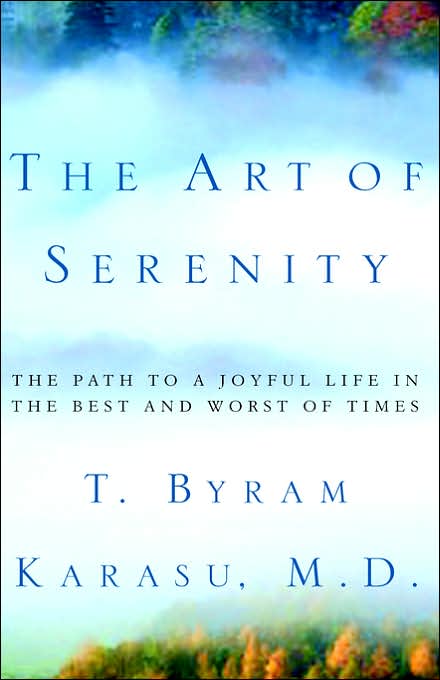
 T. Byram Karasu, M.D., is the Silverman Professor of Psychiatry and University Chairman of the Department of Psychiatry and Behavioral Sciences at the Albert Einstein College of Medicine, and Psychiatrist-in-Chief of Montefiore Medical Center. He is the author or editor of more than a dozen books, including the seminal Treatments of Psychiatric Disorders and The Art of Serenity, a New York Times bestseller. He is editor in chief of the American Journal of Psychotherapy and a Distinguished Life Fellow of the American Psychiatric Association. Dr. Karasu is a scholar, renowned clinician, teacher, and lecturer, and the recipient of numerous awards. He lives in New York City and Connecticut.
.
(Barnes & Noble.com) In an interview with his publisher, Dr. Karasu talks about his latest book, The Spirit of Happiness.
Why did you write The Spirit of Happiness?
I have practiced psychiatry for the last thirty-five years. I have written many articles and books about psychological care and sought out factors that might help people to be happy. I've studied the works of many psychologists and philosophers, and I have read the popular books that explore sources of happiness and the meaning of life. They deliver advice on self-actualization, success at work, relationships, marriage, worldviews and philosophies of living. The proliferation of these "self-ultimacy" books validates my conviction that the answer to the human dilemma can't be found in the realm of the mind. The works of secular gurus demonstrate again and again that making the mind of man its own center generates only personal confusion, unhappiness, and communal disorders.
In my book, The Art of Serenity, I identified six tenets of soulfulness and spirituality as the basic requirements for happiness: The Love of Others, The Love of Work, The Love of Belonging, Believing in the Sacred, Believing in Unity, and Believing in Transformation. I emphasized that a secular person may cultivate these extraordinary tenets but it will be difficult to maintain them without divine inspiration.
This book begins where the Art of Serenity ended, with the belief in and the love of God. This book will guide you to the next and final step: To become godly.
.
To believe -- to have faith -- in God means trusting that there is a reason for the existence of everything in this world and beyond, and that there is meaning in its mystery. It means believing that there is a Holy Purpose. To be godly means to resonate with God's Holy Purpose, to bring all your personal and mundane purposes under its umbrella. If you not only have faith, but also become godly, you'll be a recipient of God's help, friendship and boundless generosity in every aspect of your life.
To believe -- to have faith -- in God means trusting that there is a reason for the existence of everything in this world and beyond, and that there is meaning in its mystery. It means believing that there is a Holy Purpose. To be godly means to resonate with God's Holy Purpose, to bring all your personal and mundane purposes under its umbrella. If you not only have faith, but also become godly, you'll be a recipient of God's help, friendship and boundless generosity in every aspect of your life.
In this book I use the Bible as the only source of reference. Throughout the centuries, men and wisdom have praised the Bible's guidance for truthful living; its cheerful urgings of love and compassion; its eternal lessons of serenity amidst the tribulations and adversities of the world; its tender teachings of the mysteries of life. As Heinrich Heine says in Ludwig Boerne (1840), "Great and wide as the world, rooted in the abysmal depths of creation and rising aloft into the blue mysteries of heaven...sunrise and sunset, promise and fulfillment, birth and death, the whole human drama, everything is in this book. It is the Book of Books, Biblia."
I am not a man of the cloth, merely a student of the human dilemma. Any theologian who reads this book will easily see the hand of a layman at work and I hope will forgive any of my shortcomings. With that proviso, I will present how you can find God's Holy Purpose and become godly. I will describe what godliness means in all aspects of your life, ranging from your career to relationships with your spouse, children, friends, colleagues and even strangers.
Only by being godly can you be strong and successful, find joy and happiness, and live an extraordinarily meaningful existence while leading an ordinary life.
What is your definition of happiness?
Happiness is a state of serenity, an inner peacefulness that is the culmination of six factors which I describe in the book: 1) the love of others; 2) the love of work; 3) the love of belonging; 4) believing in the sacred; 5) believing in unity; 6) believing in transformation.
How is happiness in adulthood different from the happiness commonly associated with the lost paradise of childhood?
.
The happiness that we associate with childhood is related to a sense of omnipotence, immortality, and an unbridled self-entitlement. It derives from an infantile return to blissful merger with mother, a regressive union without self-boundaries or responsibility. In adulthood, these same sentiments only bring unhappiness (frustration, fear, rejection). Instead, adults need to strive for reciprocity, compassion, realism and coming to terms with one's mortality. It is cultivation of others' gardens.
Your book revolves around the concepts and actions of soulfulness and spirituality. Could you explain what you mean by being a soulful and a spiritual person?
The soulful person is one who is patient, generous, forgives mistakes of others, accepts his loved ones as they are, who protects their privacy and solitude, values their interests, celebrates their peculiarities, and seeks no perfection in others. The soulful person is committed to this work energetically and enthusiastically. The ones who harness themselves to their work are like an "ox to a heavy cart;" they burn like a good bonfire, not like a "smoky fire." The soulful person goes down uncharted roads in order to grow full and strong.
The spiritual person "kneels at the feet of all creatures," values everything but holds them loosely. He seeks simplicity and the wisdom of ordinariness. The spiritual individual gratefully wants what he already has and smiles with a sacred optimism.
The spiritual person believes that we all share a common well, a divine womb. In a state of feeling oneness with the universe, he doesn't capture things but beholds the world as one might look at stars. His or her love is a love with no object. It is just love. By such love, passion is transformed to compassion, with joyful recognition that no seed ever sees its flower.
The spiritual person believes in continuity, that we are finite in our presently expressed form, eternal in all other potential forms, that humans, animals, and vegetation all are one product, that eternity is living everywhere and everything.
Why is self-love the first step toward true joy? What distinguishes this vital quality from self-serving narcissism?
Benign self-love is self-recognition and self-acceptance. Without that, one cannot love others. Loving others begins with the internalization of being loved. Self-serving narcissism is not self-love but self-doubt, if not self-hate. Such persons would go to any extent to be the center of attention at the expense of others, including drowning them in their own pathology. In contrast, self-love goes beyond the self; it is egoless.
What are some of the key mistakes men and women make in their quest for a soulmate?
Some of the key mistakes incorporate the erroneous belief that the other person must compensate for one's own sense of failure or unhappiness, must somehow supply what is felt to be missing. Such mistakes manifest themselves as blaming each other, never apologizing, enmeshment with each other, not forgiving (and forgetting) discretions and mistakes, demanding that the other person be like himself (or herself) i.e., normal; not tolerating their peculiarities, never mind the celebrating their differences.
Given today's unstable economy and competitive pressures, work has become a source of anxiety for workers across the board. Is it possible to find real satisfaction in any job?
The absence of work generates depression, lowers one's self-esteem and weakens one's immunological system. Descarte's motto, "I think therefore I am," should be replaced with "I work therefore I am." Without work, a person not only may not be able to survive financially but is also psychologically bereft. Our work provides a framework for our usefulness. In that sense, cleaning streets or teaching students share the same commonality.
On the other hand, there are people who have jobs but are unhappy in what they do or where they do it. It is true that some jobs are easier or better paying than others or better located. However, these factors do not determine one's happiness or unhappiness at work. Such people need to self-reflect, to tease out the unsatisfactory aspect of the job as they perceive it from their personal disposition for dissatisfaction. Some people who complain about their jobs tend to be simply less competent in their specific tasks (thus not rewarded or praised by their superiors) or/and less competent in interpersonal relationships (thus either rejected by their co-workers or frequently in conflict with them). Therefore, inevitably unhappy, they will have the same situation no matter what job they take.
Some other people expect their jobs to provide everything that is missing in their lives, including the meaning of life. They complain about the "meaninglessness" of their work. There is no meaningful or meaningless work; there is only work. The meaning is extracted from any type of work by making a full commitment to it. Meaningfulness is a by-product of one's engagement with one's work. The magical process of transmuting ordinary work into something of true merit requires love of one's work (even seemingly unlovable work) and putting one's signature on it with full energy and singular attention. Such people, whether a doorman or a CEO, have glitter in their eyes. This is the glitter of self-love and self-confidence because as Thomas Moore says, "the love that goes out into your work comes back as self-love."
Why is a sense of belonging crucial to happiness? How can people who live in a guarded suburb or fragmented city far away from their families and close friends begin to create a sense of community?
One can't be happy in isolation. We are social animals; we cannot survive alone. Without a bounded mooring, we are too anxious to be happy. The amorphous threat of the infinite from without and from within has a disorganizing effect on the mind. The basic structure of community imposed upon the individual (no matter how much we complain about it) provides the security of belonging. Cut flowers don't last long. Communion makes our sorrows bearable, offers the salvation of restraint and an alternate psychological home when needed.
People in fragmented communities have to make even greater efforts to belong. The cohesiveness of their immediate family becomes even more important for their wellbeing. Through various media, they have to attempt to establish contact with their extended families, schools, social clubs, and/or religious affiliations.
How can life's greatest challenges -- failure, illness, loss -- actually bring people closer to experiencing lasting, joyful serenity?
Failures are as ephemeral as successes. Both are simply blessed illusions. It is like falling down and getting up. It is still you. The failures validate not only one's limitations but also one's potentials.
Losses are partly self-losses. There is no comfort and consolation needed. The divine light is embedded in the darkest shadows that can transfigure that unbearable pain into quiet serenity. Each person who comes through this world is called upon at some time or other to bear some of the weight of the pain that befalls the world, says Gary Zukav. You must learn to hurt better and you must be worthy of your suffering. Illnesses are just extensions of one's health. Everyone gets sick sooner or later. It is the most beaten path. Illnesses are also sacred signals, telling us of our need for realignment and giving us the opportunity to reframe our lives. They may contain messages from the depths of one's psyche that one may be on the wrong track, in the wrong profession, in the wrong relations, in the wrong town, etc. The person must first shift the valence of his life from suffering to calling. One must also focus on not what is wrong with one's body, but on what is right; not with what is broken but with what is not, and remain in harmony with one's divine discontent.
But what happens when one does not tolerate life's challenges well?
Those who do not adjust well to life's challenges excommunicate themselves. They would be alienated from their families, their colleagues at work and their friends. Their nostalgic preoccupations and chronic frustrations are depressive and contagious. Therefore, people tend to avoid them in self protection.
What do you see as the toll of our national loathing of old age? What advice can you offer for aging gracefully, in body and in spirit?
Youth and beauty are definitely praiseworthy for their age-specific criteria. Old age gets loathed if viewed by the same criteria. The old people's self-loathing is partly responsible for this. We do not have a coherent philosophy of aging. Instead of a dignified melancholy of aging resonating with old age, we angrily fight it and slip into a kind of neurosis of aging. Acceptance of aging brings some ripe sadness and light anxiety, which could bring out the depth and flavor of one's character. Aging gives weight and density to one's personality. It distills the various lifelong experiences into a meaningful whole. It allows one's thoughts, beliefs and values to coalesce into a life philosophy. Now that is worthy of praise.
Why do nature and history matter to personal happiness?
Happiness cannot occur in isolation from one's fellow beings or from nature. The self is best experienced by being part of a greater universe, by blurring of boundaries between human, nonhuman, light and space. In a great chain of beings all is continuous and homogenous. We are happy if nature is happy because we are part of nature. The communion with nature is a sacred source of joyfulness. As to history, our state of mind is influenced by our personal as well as our archetypal past -- the collective unconscious, which is multigenerational and always preempts the personal one. Our collective past frames our individual present. Our myths are our mutual philosophy. Without them we are alone. History provides continuity with our past and the prospect of learning from it for the future.
What words of wisdom can you share for coping with the ultimate fear – dying? How can the terminally ill and their loved ones still find happiness in life?
The fear of dying is universal because of the uncertainty, pain and loss associated with it, as well as our not being able to comprehend the idea of "no longer being." This fear is intensified and becomes a dread when one's sense of self is too closely identified with external factors. That is, the less one knows oneself, the worse the fear. The process of dying must be lived. Commonly, not having lived preempts that experience of dying.
It is difficult to find happiness at the time of one's own terminal illness or that of a loved one, if the person has not cultivated a philosophy of life and death earlier in his/her life. Such a philosophy can be highly personal or communal, i.e., religion. My personal philosophy is as follows: "eternity" -- permanency -- is the result of a combination of transitory factors; becoming "nothing" is the path to being everything; primordial dissolution is the ultimate serenity. Life is an eternal recycling. We are finite in our presently expressed forms but eternal in all potential forms. Meanwhile, I would suggest that you should not waste time by despairing in thinking of your end, just come to terms with it, and drink deep from the well now.
In your book, you make a powerful case for the importance of religion. Why can't a person live a good and genuinely happy life without adhering to any church's doctrine?
A person can live a good and genuinely happy life by being soulful and spiritual without adhering to any religious doctrine. Religions serve many purposes, including those of providing a congregation, identity, and a ready-made paradigm for living. They promise continuity with the past and the future, and eternal belonging. Religion is a communal matrix. It is very difficult to formulate an individual paradigm to meet all of one's needs. Some can make it and even flourish; most others need to be planted next to a stream of religion for survival. Even secular spirituality rests on the tenets of religion.
Why do you believe that people all over the planet overwhelmingly and innately believe in God?
When you look at the enormity of a starry night in which time and space seem interchangeable, or you think of the myriad of transmitters and hormones that control your body, you are awed and frightened. Then you wonder: does all this represent the visible programming of the universe by an invisible force? Jung says that we are wired for God, the programmer. It is an instinctual yearning. We need to relate our existence to a greater force, especially at times of the impending loss of a loved one or during severe illnesses. We believe, therefore we are. This innate belief in God infallibly ties all loose ends, frames our lives, gives aim to our existence, provides meaning for our God-like behavior -- caring, compassion, mercy, goodness, justice, etc. God is love, God is truth, God is humility, God is accountability. We want that. God is an ascetic surrender and sum of all virtues that we long to emulate. We want to receive the reward of having little to apologize for or to repent of at the end of our lives.
What would you most like readers to gain and put into daily practice from their encounter with The Spirit of Happiness?
I would want them to make a quantum leap to reframe and enjoy their lives by being godly: learn the nature of real love and holy relationship; learn how to extract meaning from seemingly meaningless works; learn how to knit ourselves into a convivium (living together) with others and in nature; explore a reality other than that of our five senses; happily experience the God within, and tap the underground river of spirituality -- to be optimistic and serene.
Ultimately, I would want them not to be afraid of illnesses, despair, losses or death, to give an aim to their life (fortunes as well as misfortunes) and death. This is a wonderful world!
--------------------------------------------------------------------------
In the winter of 2003, T. Byram Karasu, M.D., answered some of our questions"
What was the book that most influenced your life?
A biography of Albert Schweitzer. Here was a man, an accomplished musician, writer, and professor of theology and philosophy living in the comfortable civilized world of Strasbourg, who decides to become a physician. He leaves everything behind him and goes to Africa to help natives without any conventional gains associated with it. If anything there would be all sorts of losses: financial, health, and even danger to his life. For example, he was detained in an old French mental hospital as a prisoner of war during World War II. This was the first time I heard of someone intentionally serving others without any obvious benefit for himself. That totally confused me. I was only 11 years old and just learning the nature of reciprocity in human relationships. Schweitzer's behavior betrayed common sense. Some adults explained his behavior cynically: "He must have been running away from something!"; "He might have wanted to be famous!"; "He was having a sort of nervous breakdown!", etc.
...
B. Karasu's Books:Psychotherapy for Depression, 1990Wisdom in the Practice of Psychotherapy, 1992Deconstruction of Psychotherapy, 1996The Psychotherapist's Interventions, 1998The Psychotherapist as Healer, 2001The Art of Serenity, 2003The Art of Marriage Maintenance, 2005The Spirit of Happiness, 2006Of God and Madness: A Historical Novel, 2006
.
.
Monday, February 16, 2015
'50 Ways to Live the Good Life'

- Publisher: HarperCollins Publishers
- Pub. Date: December 2006
With her 25th book, lifestyle philosopher Alexandra Stoddard offers simple steps for taking charge of your life--your way. In brief essays filled with useful examples and optimism, she reveals 50 choices you can make to live joyfully in pursuit of what is true, good, and beautiful. Her essays help us trust ourselves ("Intuition is your guiding light"), stay steady in a storm ("Your choices count most in a crisis"), embrace the new ("Accept opportunity"), address unfinished business ("Have as few regrets as possible"), surround ourselves with delights ("Redefine what is beautiful"), and remember to have fun ("Cheap thrills are thrilling").
As a pioneering writer and lecturer on personal happiness for the past twenty years, Alexandra has inspired millions to break the "rules" and pursue fulfillment. Now, as scientists have begun to discover the benefits of living a happy life, Alexandra provides practical ways to live happily every day. She puts us in charge of our choices, reminding us that we always have a choice about what we think, feel, and do. When we are true to ourselves, we can fly above stress and conflict, contented and confident that we are the right path.
Every choice you make is an opportunity to delight in life. You Are Your Choices offers insight and companionship each step of the way.
Deborah Bigelow - Library Journal
Stoddard's (Living a Beautiful Life) guide, which invites readers to live a good, beautiful, and true life, fits right in with people's desire to live life differently in the new year. In 50 short essays, Stoddard incorporates the thoughts of great philosophers and leaders into commonsense ideas for daily application. She invites readers to embrace variety, e.g., by tasting a new flavor of ice cream or learning to identify constellations. Similarly, she encourages the celebration of simple rituals by using a special bar of soap or a beautiful towel for hand washing. Everyone will undoubtedly find something of value in this gem of a book for most public libraries.
Biography
Alexandra Stoddard is the author of more than twenty-five books and is a sought-after speaker on the art of living well. Through her lectures, articles, media appearances, and books such as Choosing Happiness, Things I Want My Daughters to Know, You Are Your Choices, and many more, she has inspired people around the world to pursue more fulfilling lives. She and her husband, Peter Megargee Brown, live in Stonington Village, Connecticut.
Table of Contents
An Invitation 1
Every Day, Commit Yourself to Experiencing the Good Life 4
Be True to All Your Choices 9
Be Responsible-Say No 12
Stand On Your Own Two Feet 15
Information Is Not Inspiration 19
Take Satisfaction in Doing the Right Thing 22
Go After What You Love 25
Have Realistic Expectations 29
Live from the Inside Out 33
Celebrate Simple Ceremonies 36
Reevaluate Your Priorities Regularly 43
Have as Few Regrets as Possible 48
Leave the Safe Harbor 52
Who Knows, It Might Be Good 57
Redefine What Is Beautiful 61
The Power of Flowers 67
Share the Beauty 72
Live with the Objects You Love 75
Why Not Be Comfortable? 80
Maintain Balance Through Your Choices 84
Cultivate Good Energy 87
Cheap Thrills Are Thrilling 91
You Own Your Self 95
Stop Complaining 98
Accept Responsibility 101
Be Aware 104
Your Choices Count Most in a Crisis 107
Faster Isn't Better 109
Reach Out-Literally 113
Privacy Please 116
A Free Day for You 119
Good Design Matters 122
Enough Is Enough 125
Give Yourself Time 130
Get Going 134
Embrace Variety 138
Move On 143
Walk Away 147
See the Big in the Little 150
Surround Yourself with People You Trust 154
Intuition Is Your Guiding Light 157
Never Say Never 160
Understand the Law of Cause and Effect 162
Choose Love for Yourself and Others 165
Do More Things That Make You Happy 168
Trust Your Subjective Well-Being 171
Avoid Perfection in Pursuit of Excellence 176
Get Organized 181
Why Not Now? 186
Wise Choices, Yes, and Good Luck 190
.
Source: Barnes and Noble
.Every Day, Commit Yourself to Experiencing the Good Life 4
Be True to All Your Choices 9
Be Responsible-Say No 12
Stand On Your Own Two Feet 15
Information Is Not Inspiration 19
Take Satisfaction in Doing the Right Thing 22
Go After What You Love 25
Have Realistic Expectations 29
Live from the Inside Out 33
Celebrate Simple Ceremonies 36
Reevaluate Your Priorities Regularly 43
Have as Few Regrets as Possible 48
Leave the Safe Harbor 52
Who Knows, It Might Be Good 57
Redefine What Is Beautiful 61
The Power of Flowers 67
Share the Beauty 72
Live with the Objects You Love 75
Why Not Be Comfortable? 80
Maintain Balance Through Your Choices 84
Cultivate Good Energy 87
Cheap Thrills Are Thrilling 91
You Own Your Self 95
Stop Complaining 98
Accept Responsibility 101
Be Aware 104
Your Choices Count Most in a Crisis 107
Faster Isn't Better 109
Reach Out-Literally 113
Privacy Please 116
A Free Day for You 119
Good Design Matters 122
Enough Is Enough 125
Give Yourself Time 130
Get Going 134
Embrace Variety 138
Move On 143
Walk Away 147
See the Big in the Little 150
Surround Yourself with People You Trust 154
Intuition Is Your Guiding Light 157
Never Say Never 160
Understand the Law of Cause and Effect 162
Choose Love for Yourself and Others 165
Do More Things That Make You Happy 168
Trust Your Subjective Well-Being 171
Avoid Perfection in Pursuit of Excellence 176
Get Organized 181
Why Not Now? 186
Wise Choices, Yes, and Good Luck 190
.
Source: Barnes and Noble
Wednesday, May 15, 2013
The Value of the Humanities
The Value of the Humanities
By James Grossman
"The higher education system needs to evolve with the economy. . . . People pay taxes expecting that the public good will be served to the greatest degree possible. We call that a return on investment."
—Dale A. Brill, chairman of the Florida governor's task force on higher education
—Dale A. Brill, chairman of the Florida governor's task force on higher education
A"blue-ribbon" task force has recommended to Florida Governor Rick Scott that the state's public universities adopt a "strategic" tuition structure. "Strategic" in this case does not imply the kind of thoughtful planning that considers all aspects of an institution's mission and future. These recommendations instead offer a very narrow idea of strategy, designed, in the words of the president of the state senate, "to lash higher education to the realities and opportunities of the economy."
Perhaps more a leash than a lash. And a short leash, because even in the narrowest financial sense this is short-term thinking that ties the public university system to a single aspect of what should be a broad mission.
There are two issues here: whether the state's interest in public higher education is so purely financial that "return on investment" can be measured only in dollars, cents, and employment rates; and even within this narrow (and narrow-minded) frame whether this is smart strategy indeed.
The answer is no, on both counts, and I am proud that a group of historians at the University of Florida is spearheading the opposition with an online petition challenging the recommendations.
Both issues involve the concept of value. What is the value to the people of the state of Florida not only of the very presence of public higher education institutions, but also of each individual's graduation from those institutions? What is in it for the taxpayer to pay for some part of someone else's enhanced opportunities? What is the public "return on investment" for expenditures on postsecondary education?
These are big questions. Arguably, one has only to accept their importance to recognize why this task force's recommendations are so wrong-headed. The bull's-eye on the task force's target is the humanities. Governor Scott has made this clear in other contexts ("Is it a vital interest of the state to have more anthropologists? I don't think so," he quipped in an interview) and suggested that humanities degrees are luxuries that are not affordable in a world of fiscal stringency and global competitiveness. But these are the very issues that humanities scholars discuss. Humanists teach students to inquire about the nature of value, why it matters to consider the particular time and place in which one is attributing value, and (yes), how to identify and evaluate the different ways of measuring that value.
It seems particularly striking that the governor of the state of Florida would find it difficult to appreciate the value of education beyond the narrow (if essential) arena of job creation and training. This is a state that would benefit from informed and thoughtful conversations about the nature of democracy, the basis of participation in a democratic polity, and the history of limitations on that participation. I don't know whether the state of Florida in particular needs more anthropologists; but I stand with National Endowment for the Humanities Chairman Jim Leach, who has suggested that having policymakers with more knowledge about the history and culture of certain countries in the Middle East and central Asia might have saved us a few wars, billions of dollars, and a lot of lives. Policymakers who majored in those "less strategic" disciplines in college like history and anthropology.
For the moment, however, let's concede the principle of the centrality of fiscal practicality to higher education policy. I agree that college education—at least in part—ought to serve individual career interests and even the state's interest in economic development. Most college students (and their parents who often foot the bill) do not have the luxury of excluding financial considerations from their educational choices. Indeed, the AHA's "Tuning" project is in part oriented toward enhancing the ability of first-year college students and their parents to appreciate the earning potential of a history major; and toward helping potential employers comprehend the "value" that a college graduate trained in historical thinking brings to the workplace.
I am guessing, however, that neither Brill nor Scott nor the Florida task force members have the foggiest notion of what that "value" is. Nor does Governor Scott Walker of Wisconsin, who seems to think that these are good ideas that ought to travel north. It is possible that a history major (or a major in philosophy, English, or even Governor Scott's academic bête noir, anthropology), might not prepare a student for their first job in the private sector (which is Governor Scott's terrain, and that of Brill, who directs the research and policy development arm of the Florida Chamber of Commerce). It is the second job—and the third and fourth jobs—where humanities education comes into play. Ask most CEOs of large corporations, or thoughtful recruiters. I have. They will tell you that the company can teach a well-educated graduate whatever they need to know to do various kinds of entry-level work. They are looking for applicants who want to learn and know how to learn, educated men and women who can find and filter information, make sense out of it, and communicate what they have learned. In other words, history majors are as valuable to the state of Florida as mechanical engineers. And we won't even begin to discuss how mechanical engineers can benefit from sharing dorm space with history majors (and vice versa, of course).
—James Grossman is executive director of the AHA.
The Humanities and the World
By Allen Mikaelian
My friends who are lobbyists (everyone in DC has at least a few) tell me that they have never had less influence. Not long ago, when Congress actually passed legislation, lobbyists’ seeds could find be planted, for better or worse, in the furrows opened up by compromise. But when everything seems dictated by ideology, and the ground for compromise narrows to the vanishing point, lobbyists and advocates can accomplish little.
And yet, there we were, on Humanities Advocacy Day in mid-March, paying visits to senators’ legislative aides to make the case for continued funding of the National Endowment for the Humanities (NEH), the National Historical Publications and Records Commission, and other programs devoted to humanities research and education. This should not have been a hard case to make; the amount of money devoted to the humanities in the federal budget is miniscule, the benefits are clear, and we weren’t even asking for more money—just a vote to staunch the bleeding of the last several years.
Still, the default position on the Hill right now is to cut first and ask questions later, and only those programs with clear benefit have a chance. So what is the clear benefit of humanities programs? It is no longer feasible to rely solely on the idea of “enriching” society, or even the benefits to society of a citizenship informed by the study of humanity. (Perhaps it’s best to stay away from the word “society” altogether, at least with some congressional staffers.) Certain members of Congress have all but ruled out funding for study their own contexts through the lens of political science—see this month’s Coalition Column and the recent statement by the AHA Council for examples.
One argument for the humanities, which was offered during our preparations for the advocacy day, struck me as particularly compelling, and when I presented it during a meeting with a legislative aide, it seemed to spark something. (At least she started to write things down, and responded positively when I followed up with information relating the argument to her state.) In summary, the argument goes, we can’t have an effective workforce in the global economy without the humanities. You just can’t get to an understanding of the role of culture and history in shaping globalization through study of STEM alone.
An example at hand is the NEH’s Bridging Cultures initiative, and the program under this umbrella that has a home in the AHA (Perspectives on History, March 2013). Here, community college teachers are discovering how the United States is part of the Pacific world. The benefits to understanding this area as an interconnected region in the global era are obvious, and the fact that this understanding will be imparted to students in two-year universities, where so much job training and retraining is happening, is truly exciting.
An example in this issue of Perspectives is Hong-Ming Liang’s work on the Middle Ground Journal. Liang shows how an academic journal can do much more than publish scholarship, and that an editor is much more than a wordsmith. His journal is part of a global network of scholars, but also of teachers and students at several levels.
By bringing that network to his students and to students in other departments, the work his journal does connects those students to the world. It’s not surprising that he finds interested interns among the college’s marketing department as well as among history majors. As a defense of the humanities, the project goes beyond the well-worn and unspecific claims that the humanities deliver “enrichment” or “critical thinking.” Further, the project is encouraging because the content matters—it is no accident that a world history journal is at the center of this project.
All of this, however, puts some additional imperatives behind the issues raised by Luke Clossey and Nicholas Guyatt in this issue. If the wider world is truly in “historians’ peripheral vision,” as they suggest, the consequences are profound and the opportunities that could be missed are immense. The discipline has an interest in keeping itself diverse for more than the sake of diversity alone. Without a greater balance between the amount of research devoted to a region and its global relevance, the discipline as a whole becomes much easier to dismiss.
Other disciplines have significant external pressures to maintain a global vision: The scientific community has global interests, scope, and networks. Economic imperatives push engineering toward greater global activity, if not global awareness.
Historians, on the other hand, will have to further global awareness in the discipline by themselves. Their job will be made easier by the fact that the discipline is naturally curious and open, but resources for the infrastructures, additional training, and travel needed to even out some of the disparities Clossey and Guyatt point to will be hard to come by.
Such help won’t, we can be sure, be arriving from Congress any time soon.
—Allen Mikaelian is the editor of Perspectives on History.
© American Historical Association
Wednesday, January 16, 2013
Can non-Europeans think?
Hamid Dabashi, Columbia University
In a lovely little panegyric for the distinguished European philosopher Slavoj Zizek, published recently on Al Jazeera, we read:
There are many important and active philosophers today: Judith Butler in the United States, Simon Critchley in England, Victoria Camps in Spain, Jean-Luc Nancy in France, Chantal Mouffe in Belgium, Gianni Vattimo in Italy, Peter Sloterdijk in Germany and in Slovenia, Slavoj Zizek, not to mention others working in Brazil, Australia and China.
What immediately strikes the reader when seeing this opening paragraph is the unabashedly European character and disposition of the thing the author calls "philosophy today" - thus laying a claim on both the subject and time that is peculiar and in fact an exclusive property of Europe.
Even Judith Butler who is cited as an example from the United States is decidedly a product of European philosophical genealogy, thinking somewhere between Derrida and Foucault, brought to bear on our understanding of gender and sexuality.
To be sure, China and Brazil (and Australia, which is also a European extension) are cited as the location of other philosophers worthy of the designation, but none of them evidently merits a specific name to be sitting next to these eminent European philosophers.
The question of course is not the globality of philosophical visions that all these prominent European (and by extension certain American) philosophers indeed share and from which people from the deepest corners of Africa to the remotest villages of India, China, Latin America, and the Arab and Muslim world ("deep and far", that is, from a fictive European centre) can indeed learn and better understand their lives.
That goes without saying, for without that confidence and self-consciousness these philosophers and the philosophical traditions they represent can scarce lay any universal claim on our epistemic credulities, nor would they be able to put pen to paper or finger to keyboard and write a sentence.
Thinkers outside Europe
These are indeed not only eminent philosophers, but the philosophy they practice has the globality of certain degrees of self-conscious confidence without which no thinking can presume universality.
The question is rather something else: What about other thinkers who operate outside this European philosophical pedigree, whether they practice their thinking in the European languages they have colonially inherited or else in their own mother tongues - in Asia, in Africa, in Latin America, thinkers that have actually earned the dignity of a name, and perhaps even the pedigree of a "public intellectual" not too dissimilar to Hannah Arendt, Jean-Paul Sartre, and Michel Foucault that in this piece on Al Jazeera are offered as predecessors of Zizek?
| "Why is European philosophy 'philosophy', but African philosophy 'ethnophilosophy'?" |
What about thinkers outside the purview of these European philosophers; how are we to name and designate and honour and learn from them with the epithet of "public intellectual" in the age of globalised media?
Do the constellation of thinkers from South Asia, exemplified by leading figures like Ashis Nandy, Partha Chatterjee, Gayatri Spivak, Ranajit Guha, Sudipta Kaviraj, Dipesh Chakrabarty, Homi Bhabha, or Akeel Bilgrami, come together to form a nucleus of thinking that is conscious of itself? Would that constellation perhaps merit the word "thinking" in a manner that would qualify one of them - as a South Asian - to the term "philosopher" or "public intellectuals"?
Are they "South Asian thinkers" or "thinkers", the way these European thinkers are? Why is it that if Mozart sneezes it is "music" (and I am quite sure the great genius even sneezed melodiously) but the most sophisticated Indian music ragas are the subject of "ethnomusicology"?
Is that "ethnos" not also applicable to the philosophical thinking that Indian philosophers practice - so much so that their thinking is more the subject of Western European and North American anthropological fieldwork and investigation?
We can turn around and look at Africa. What about thinkers like Henry Odera Oruka, Ngugi wa Thiong'o, Wole Soyinka, Chinua Achebe, Okot p'Bitek, Taban Lo Liyong, Achille Mbembe, Emmanuel Chukwudi Eze, Souleymane Bachir Diagne, V.Y. Mudimbe: Would they qualify for the term "philosopher" or "public intellectuals" perhaps, or is that also "ethnophilosophy"?
Why is European philosophy "philosophy", but African philosophy ethnophilosophy, the way Indian music is ethnomusic - an ethnographic logic that is based on the very same reasoning that if you were to go to the New York Museum of Natural History (popularised in Shawn Levy's Night at the Museum [2006]), you only see animals and non-white peoples and their cultures featured inside glass cages, but no cage is in sight for white people and their cultures - they just get to stroll through the isles and enjoy the power and ability of looking at taxidermic Yaks, cave dwellers, elephants, Eskimos, buffalo, Native Americans, etc, all in a single winding row.
The same ethnographic gaze is evident in the encounter with the intellectual disposition of the Arab or Muslim world: Azmi Bishara, Sadeq Jalal Al-Azm, Fawwaz Traboulsi, Abdallah Laroui, Michel Kilo, Abdolkarim Soroush. The list of prominent thinkers and is endless.
In Japan, Kojan Karatani, in Cuba, Roberto Fernandez Retamar, or even in the United States people like Cornel West, whose thinking is not entirely in the European continental tradition - what about them? Where do they fit in? Can they think - is what they do also thinking, philosophical, pertinent, perhaps, or is that also suitable for ethnographic examinations?
The question of Eurocentricism is now entirely blase. Of course Europeans are Eurocentric and see the world from their vantage point, and why should they not? They are the inheritors of multiple (now defunct) empires and they still carry within them the phantom hubris of those empires and they think their particular philosophy is "philosophy" and their particular thinking is "thinking", and everything else is - as the great European philosopher Immanuel Levinas was wont of saying - "dancing".
The question is rather the manner in which non-European thinking can reach self-consciousness and evident universality, not at the cost of whatever European philosophers may think of themselves for the world at large, but for the purpose of offering alternative (complementary or contradictory) visions of reality more rooted in the lived experiences of people in Africa, in Asia, in Latin America - counties and climes once under the spell of the thing that calls itself "the West" but happily no more.
The trajectory of contemporary thinking around the globe is not spontaneously conditioned in our own immediate time and disparate locations, but has a much deeper and wider spectrum that goes back to earlier generations of thinkers ranging from José Marti to Jamal al-Din al-Afghani, to Aime Cesaire, W.E.B. DuBois, Liang Qichao, Frantz Fanon, Rabindranath Tagore, Mahatma Gandhi, etc.
So the question remains why not the dignity of "philosophy" and whence the anthropological curiosity of "ethnophilosophy"?
Let's seek the answer from Europe itself - but from the subaltern of Europe.
'The Intellectuals as a Cosmopolitan Stratum'
In his Prison Notebooks, Antonio Gramsci has a short discussion about Kant's famous phrase in Groundwork of the Metaphysics of Morals (1785) that is quite critical in our understanding of what it takes for a philosopher to become universally self-conscious, to think of himself as the measure and yardstick of globality. Gramsci's stipulation is critical here - and here is how he begins:
Kant's maxim "act in such a way that your conduct can become a norm for all men in similar conditions" is less simple and obvious than it appears at first sight. What is meant by 'similar conditions'?
To be sure, and as Quintin Hoare and Geoffrey Nowell Smith (the editors and translators of the English translation of Gramsci's Prison Notebooks) note, Gramsci here in fact misquotes Kant, and that "similar conditions" does not appear in the original text, where the German philosopher says: "I am never to act otherwise than so that I could also will that my maxim should become a universal law." This principle, called "the categorical imperative", is in fact the very foundation of Kantian ethics.
So where Kant says "universal law", Gramsci says, "a norm for all men", and then he adds an additional "similar conditions", which is not in the German original.
| "The world at large, and the Arab and Muslim world in particular, is going through world historic changes - these changes have produced thinkers, poets, artists, and public intellectuals at the centre of their moral and politcial imagination." |
That misquoting is quite critical here. Gramsci's conclusion is that the reason Kant can say what he says and offer his own behaviour as measure of universal ethics is that "Kant's maxim presupposes a single culture, a single religion, a 'world-wide' conformism... Kant's maxim is connected with his time, with the cosmopolitan enlightenment and the critical conception of the author. In brief, it is linked to the philosophy of the intellectuals as a cosmopolitan stratum".
What in effect Gramsci discovers, as a southern Italian suffering in the dungeons of European fascism, is what in Brooklyn we call chutzpah, to think yourself the centre of universe, a self-assuredness that gives the philosopher that certain panache and authority to think in absolutists and grand narrative terms.
Therefore the agent is the bearer of the "similar conditions" and indeed their creator. That is, he "must" act according to a "model" which he would like to see diffused among all mankind, according to a type of civilisation for whose coming he is working-or for whose preservation he is "resisting" the forces that threaten its disintegration.
It is precisely that self-confidence, that self-consciousness, that audacity to think yourself the agent of history that enables a thinker to think his particular thinking is "Thinking" in universal terms, and his philosophy "Philosophy" and his city square "The Public Space", and thus he a globally recognised Public Intellectual.
There is thus a direct and unmitigated structural link between an empire, or an imperial frame of reference, and the presumed universality of a thinker thinking in the bosoms of that empire.
As all other people, Europeans are perfectly entitled to their own self-centrism.
The imperial hubris that once enabled that Eurocentricism and still produces the infomercials of the sort we read in Al Jazeera for Zizek are the phantom memories of the time that "the West" had assured confidence and a sense of its own universalism and globality, or as Gramsci put it, "to a type of civilisation for whose coming he is working".
But that globality is no more - people from every clime and continent are up and about claiming their own cosmopolitan worldliness and with it their innate ability to think beyond the confinements of that Eurocentricism, which to be sure is still entitled to its phantom pleasures of thinking itself the centre of the universe. The Gramscian superimposed "similar conditions" are now emerging in multiple cites of the liberated humanity.
The world at large, and the Arab and Muslim world in particular, is going through world historic changes - these changes have produced thinkers, poets, artists, and public intellectuals at the centre of their moral and politcial imagination - all thinking and acting in terms at once domestic to their immediate geography and yet global in its consequences.
Compared to those liberating tsunamis now turning the world upside down, cliche-ridden assumption about Europe and its increasingly provincialised philosophical pedigree is a tempest in the cup. Reduced to its own fair share of the humanity at large, and like all other continents and climes, Europe has much to teach the world, but now on a far more leveled and democratic playing field, where its philosophy is European philosophy not "Philosophy", its music European music not "Music", and no infomercial would be necessary to sell its public intellectuals as "Public Intellectuals".
Hamid Dabashi is the Hagop Kevorkian Professor of Iranian Studies and Comparative Literature at Columbia University in New York. Among his most recent books is The World of Persian Literary Humanism (2012).
The views expressed in this article are the author's own and do not necessarily reflect Al Jazeera's editorial policy.
Friday, April 01, 2011
10 Tips on How to Write Less Badly
Michael C. Munger, Duke University
The Chronicle of Higher Education
September 6, 2010

Brian Taylor
In my nearly 30 years at universities, I have seen a lot of very talented people fail because they couldn't, or didn't, write. And some much less talented people (I see one in the mirror every morning) have done OK because they learned how to write.
It starts in graduate school. There is a real transformation, approaching an inversion, as people switch from taking courses to writing. Many of the graduate students who were stars in the classroom during the first two years—the people everyone admired and looked up to—suddenly aren't so stellar anymore. And a few of the marginal students—the ones who didn't care that much about pleasing the professors by reading every page of every assignment—are suddenly sending their own papers off to journals, getting published, and transforming themselves into professional scholars.
The difference is not complicated. It's writing.
Rachel Toor and other writers on these pages have talked about how hard it is to write well, and of course that's true. Fortunately, the standards of writing in most disciplines are so low that you don't need to write well. What I have tried to produce below are 10 tips on scholarly nonfiction writing that might help people write less badly.
1. Writing is an exercise. You get better and faster with practice. If you were going to run a marathon a year from now, would you wait for months and then run 26 miles cold? No, you would build up slowly, running most days. You might start on the flats and work up to more demanding and difficult terrain. To become a writer, write. Don't wait for that book manuscript or that monster external-review report to work on your writing.
2. Set goals based on output, not input. "I will work for three hours" is a delusion; "I will type three double-spaced pages" is a goal. After you write three pages, do something else. Prepare for class, teach, go to meetings, whatever. If later in the day you feel like writing some more, great. But if you don't, then at least you wrote something.
3. Find a voice; don't just "get published." James Buchanan won a Nobel in economics in 1986. One of the questions he asks job candidates is: "What are you writing that will be read 10 years from now? What about 100 years from now?" Someone once asked me that question, and it is pretty intimidating. And embarrassing, because most of us don't think that way. We focus on "getting published" as if it had nothing to do with writing about ideas or arguments. Paradoxically, if all you are trying to do is "get published," you may not publish very much. It's easier to write when you're interested in what you're writing about.
4. Give yourself time. Many smart people tell themselves pathetic lies like, "I do my best work at the last minute." Look: It's not true. No one works better under pressure. Sure, you are a smart person. But if you are writing about a profound problem, why would you think that you can make an important contribution off the top of your head in the middle of the night just before the conference?
Writers sit at their desks for hours, wrestling with ideas. They ask questions, talk with other smart people over drinks or dinner, go on long walks. And then write a whole bunch more. Don't worry that what you write is not very good and isn't immediately usable. You get ideas when you write; you don't just write down ideas.
The articles and books that will be read decades from now were written by men and women sitting at a desk and forcing themselves to translate profound ideas into words and then to let those words lead them to even more ideas. Writing can be magic, if you give yourself time, because you can produce in the mind of some other person, distant from you in space or even time, an image of the ideas that exist in only your mind at this one instant.
5. Everyone's unwritten work is brilliant. And the more unwritten it is, the more brilliant it is. We have all met those glib, intimidating graduate students or faculty members. They are at their most dangerous holding a beer in one hand and a cigarette in the other, in some bar or at an office party. They have all the answers. They can tell you just what they will write about, and how great it will be.
Years pass, and they still have the same pat, 200-word answer to "What are you working on?" It never changes, because they are not actually working on anything, except that one little act.
You, on the other hand, actually are working on something, and it keeps evolving. You don't like the section you just finished, and you are not sure what will happen next. When someone asks, "What are you working on?," you stumble, because it is hard to explain. The smug guy with the beer and the cigarette? He's a poseur and never actually writes anything. So he can practice his pat little answer endlessly, through hundreds of beers and thousands of cigarettes. Don't be fooled: You are the winner here. When you are actually writing, and working as hard as you should be if you want to succeed, you will feel inadequate, stupid, and tired. If you don't feel like that, then you aren't working hard enough.
6. Pick a puzzle. Portray, or even conceive, of your work as an answer to a puzzle. There are many interesting types of puzzles:
- "X and Y start with same assumptions but reach opposing conclusions. How?"
- "Here are three problems that all seem different. Surprisingly, all are the same problem, in disguise. I'll tell you why."
- "Theory predicts [something]. But we observe [something else]. Is the theory wrong, or is there some other factor we have left out?"
Don't stick too closely to those formulas, but they are helpful in presenting your work to an audience, whether that audience is composed of listeners at a lecture or readers of an article.
7. Write, then squeeze the other things in. Put your writing ahead of your other work. I happen to be a "morning person," so I write early in the day. Then I spend the rest of my day teaching, having meetings, or doing paperwork. You may be a "night person" or something in between. Just make sure you get in the habit of reserving your most productive time for writing. Don't do it as an afterthought or tell yourself you will write when you get a big block of time. Squeeze the other things in; the writing comes first.
8. Not all of your thoughts are profound. Many people get frustrated because they can't get an analytical purchase on the big questions that interest them. Then they don't write at all. So start small. The wonderful thing is that you may find that you have traveled quite a long way up a mountain, just by keeping your head down and putting one writing foot ahead of the other for a long time. It is hard to refine your questions, define your terms precisely, or know just how your argument will work until you have actually written it all down.
9. Your most profound thoughts are often wrong. Or, at least, they are not completely correct. Precision in asking your question, or posing your puzzle, will not come easily if the question is hard.
I always laugh to myself when new graduate students think they know what they want to work on and what they will write about for their dissertations. Nearly all of the best scholars are profoundly changed by their experiences in doing research and writing about it. They learn by doing, and sometimes what they learn is that they were wrong.
10. Edit your work, over and over. Have other people look at it. One of the great advantages of academe is that we are mostly all in this together, and we all know the terrors of that blinking cursor on a blank background. Exchange papers with peers or a mentor, and when you are sick of your own writing, reciprocate by reading their work. You need to get over a fear of criticism or rejection. Nobody's first drafts are good. The difference between a successful scholar and a failure need not be better writing. It is often more editing.
If you have trouble writing, then you just haven't written enough. Writing lots of pages has always been pretty easy for me. I could never get a job being only a writer, though, because I still don't write well. But by thinking about these tips, and trying to follow them myself, I have gotten to the point where I can make writing work for me and my career.
Subscribe to:
Posts (Atom)


Photography

dpchallenge.com